No gym membership, no equipment, no excuses. Bodyweight training uses your own body as resistance, making it one of the most accessible and effective ways to build strength, endurance, and mobility — whether you’re at home, traveling, or squeezing in a workout during a lunch break.
Why Bodyweight Training Works
Bodyweight exercises engage multiple muscle groups simultaneously, improve functional strength for everyday movement, and can be scaled in difficulty simply by adjusting reps, tempo, or variations. Research consistently shows that bodyweight training can build meaningful strength and muscle, especially for beginners and intermediate exercisers.
Upper Body Exercises
Push-Ups
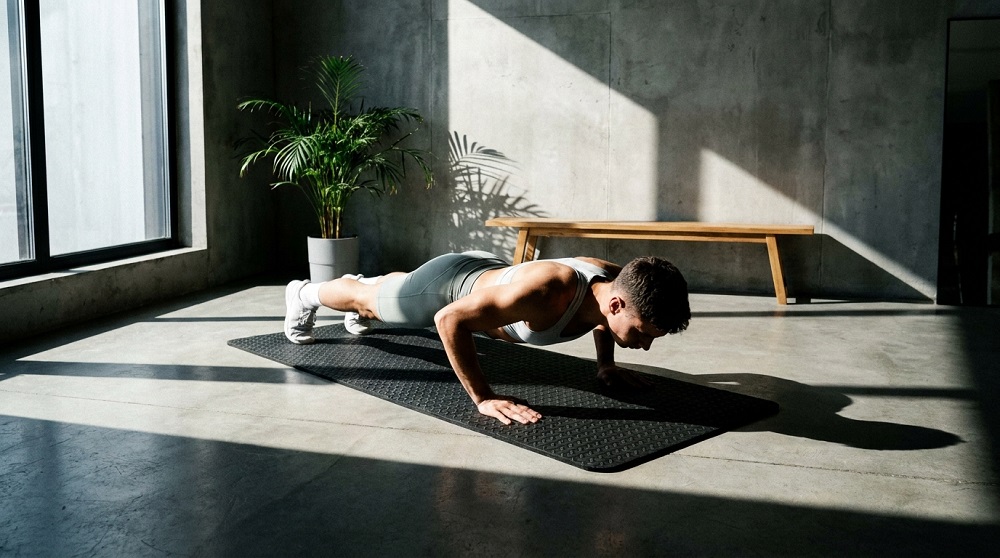
The classic push-up targets the chest, shoulders, triceps, and core.
- Beginner variation: Knee push-ups or incline push-ups against a wall or bench
- Advanced variation: Diamond push-ups or decline push-ups with feet elevated
Tricep Dips
Using a chair, bench, or stable edge, tricep dips isolate the back of the arms while also engaging the shoulders.
Plank-to-Push-Up
Alternating between a forearm plank and a full push-up position builds shoulder stability and core strength simultaneously.
Lower Body Exercises
Squats
A foundational movement for building leg and glute strength.
- Beginner variation: Bodyweight squats with a chair behind you for guidance
- Advanced variation: Jump squats or single-leg pistol squats
Lunges
Lunges target the quads, hamstrings, and glutes while also challenging balance.
- Forward lunges
- Reverse lunges
- Walking lunges for added cardio benefit
Glute Bridges
Lying on your back with knees bent, lifting the hips activates the glutes and hamstrings while being gentle on the knees and lower back.
Calf Raises
A simple, often overlooked exercise that strengthens the lower legs and can be done virtually anywhere, including while standing in line.
Core Exercises
Plank
One of the most effective core stabilizers, engaging the entire trunk.
- Beginner variation: Knee plank
- Advanced variation: Plank with shoulder taps or a stability challenge
Bicycle Crunches
Targets the obliques and rectus abdominis through a rotational movement.
Mountain Climbers
Combines core engagement with a cardiovascular element, making it a great addition to circuit-style workouts.
Full-Body and Cardio Movements
Burpees
A high-intensity, full-body exercise combining a squat, plank, and jump — excellent for building both strength and cardiovascular endurance.
Jumping Jacks
A simple, effective way to elevate heart rate for a warm-up or active recovery between strength exercises.
Bear Crawls
Engages the shoulders, core, and legs simultaneously while improving coordination.
Building a Simple Bodyweight Routine
A balanced full-body circuit might look like:
- 10–15 push-ups
- 15–20 bodyweight squats
- 30-second plank
- 10 lunges per leg
- 10 glute bridges
- 20 jumping jacks
Repeat the circuit 2–4 times, resting briefly between rounds, for a complete workout in 15–25 minutes.
Tips for Progression
Since bodyweight exercises don’t rely on added weight, progression comes from adjusting other variables:
- Increase repetitions or sets over time
- Slow down the tempo to increase time under tension
- Reduce rest periods between exercises
- Move to more advanced variations as strength improves
The Bottom Line
Bodyweight exercises prove that effective strength training doesn’t require a gym or equipment. With a mix of push, pull, squat, and core movements, it’s possible to build a well-rounded fitness routine anywhere — at home, in a hotel room, or outdoors.
This article is for general informational purposes and isn’t a substitute for personalized advice from a fitness professional or physician, especially for those with existing injuries or health conditions.