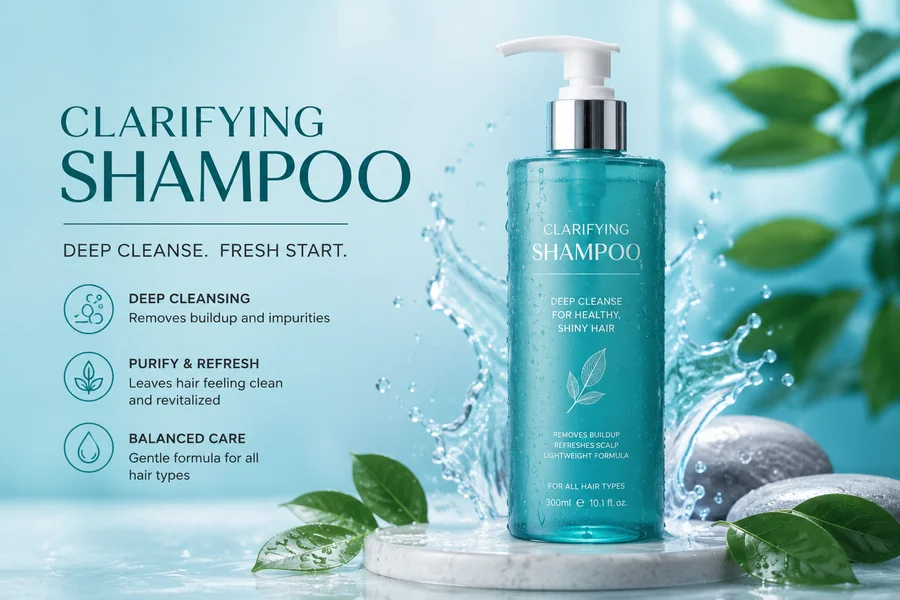
Even after a wash, product build-up may be the cause of your hair feeling heavy, greasy or lifeless. Suganda Clarifying Shampoo is developed to cleanse the scalp and hair in a deep manner to leave behind residues caused by styling products, oils, minerals and pollution. As compared to a normal shampoo, it is a more intense clean and can be used to revitalize the look of hair, giving it volume, and freshness. When used properly, it is a great addition to a healthy hair care routine, but it does not lead to superfluous dryness.
What Is a Clarifying Shampoo?
A clarifying shampoo is a cleansing hair product that is deep-cleansing and designed to cleanse off any hard deposition that can be left behind during normal shampooings. With time, the hairsprays, dry shampoos, gels, conditioners, and even natural oils may accumulate on the scalp and hair strands. The minerals of the hard water and the environmental contaminants might also adhere to the hair making it dry and hard to handle.
This shampoo is composed of stronger cleansing ingredients as compared to a daily shampoo. It operates by disintegrating and cleansing away debris to leave your hair feeling lighter and cleaner. Some of them observe an improved volume and quality softness.
Though it is extremely efficient, it is not intended to be used on a daily basis. It is necessary only once or twice a week, depending on the hair type and lifestyle of most people.
Benefits of Using a Clarifying Shampoo
A clarifying shampoo can be used to enhance your general hair condition in a number of ways.
Among the largest benefits will be the elimination of product buildup. Hair styling products leave behind some invisible layers which cannot be totally washed out even after doing regular washing. A serious wash will revive the natural movement that is present in your hair.
Another benefit is a healthier scalp. With time, hair follicles may become clogged with excess oil, dirt, and dead skin cells. A clean head will provide a healthier environment to grow healthy hair, and it will make it less itchy.
Clarifying makes hair easier to style too. Curls are more pronounced, straight hair is smoother, and hairstyles have a longer shelf life without heavy residue.
When you regularly swim in chlorinated pools or reside in a hard-water neighborhood, it’s possible to remove mineral deposits that render hair rough or dull-looking with help of a clarifying shampoo.
Lastly, it sets up your hair to be treated like it would be during coloring or deep conditioning. The products are more effective when the hair is clean since it does not have so much accumulation that prevents absorption.
When Should You Use a Clarifying Shampoo?
The optimal hair length varies based on your hair type, lifestyles and use of products.
Individuals who use styling creams, gels, waxes, or hairsprays on a regular basis, might consider using it once a week. Oily scalp individuals have it known that, when they give their scalp a good deep wash every week, their hair stays fresher.
When your hair is dry or curly or chemically treated, then you will not need to apply it every two to four weeks. Such hair types are more moisturized by nature, so using clarifying cleanser in excess can strip them of natural oils that can be beneficial.
You might also require one following swimming in pools, exposure to dusty surroundings, or any indication of accumulating.
Common signs include:
- Even after taking a shower, hair seems greasy.
- Hair is listless or two dimensional.
- Styling gels cease to work.
- Scalp is itchy.
- It no longer appears to be effective with conditioners.
In case these problems are manifested, a thorough washing can resolve the problem.
How to Use Clarifying Shampoo Correctly
A clarifying shampoo is easy to use, and by using appropriate steps it is possible to avoid being dry.
Begin by pouring warm water to thoroughly wet your hair. The warm water assists in loosening dirt and oil after which it cleans.
Squirt a little shampoo onto your head and gently rub with your fingertips. Concentrate primarily on the head as this is where most of the accumulation occurs. The lather cleans the rest of your hair as you rinse it. Run under water to wash off.
Because deep-cleansing shampoos do eliminate oils, a moisturizing conditioner is always needed. Allow the conditioner to stay a few minutes and then wash. This aids in softness restoration and minimal chances of drying up.
When exceptionally dry, use a deep conditioning mask when washing your hair.
Washing again and again during a session is not advisable until there is a lot of build up in your hair. A single wash is sufficient.
Choosing the Right Clarifying Shampoo for Your Hair Type
Not all formulas can fit all. Depending on your hair type, it does make a difference which you choose.
In case of oily hair, find light formulas that concentrate on oil management; avoiding heavy moisturizers.
To reduce the drying or frizzled hair, pick the sulfate free or moisturizing ones that clean ensuring that the water is not lost.
Individuals who have colored hair are advised to use products that are specified to be safe to colored hair. Certain powerful cleansers can last too long resulting in loss of hair color.
Curly hair is now enjoying the compounds that eliminate the accumulation of products and moisture remain intact. Given that curls inherently dry out more easily, it is critical to strike a balance between cleansing and hydration.
When you have a sensitive scalp, you should not use products with a lot of fragrance or containing harsh ingredients. Weak botanical extracts are gentle enough to offer effective cleansing with fewer irritations.
The ingredient list and instructions given by the manufacturer can make you select the appropriate product to meet your requirements.
Read More: Acne Prone Skin How To Prevent Damage During Your Skincare Routine
Common Mistakes to Avoid
Clarifying shampoos can be beneficial; nevertheless, a few errors can diminish their usefulness.
Using them excessively is one of the pitfalls. The constant washing can remove the protective oils, resulting in hair that is dry, brittle and can easily break apart.
The other error is not using conditioner afterwards. Always deep-cleansing should be accompanied with moisturizing care to help regulate balance.
There is no need to use copious quantities of shampoo. A medium size is generally sufficient to give adequate cleaning power.
There are individuals who desire damaged hair to be fixed immediately. A clarification can also eliminate buildup but cannot fix split ends or chemical damage. Even healthy hair needs conditioning, trimming and care.
Another problem is trying to neglect your hair type. One good product in an oily hair might not be appropriate with a dry or curly hair.
And finally, it is crucial to remember that hard water can also accumulate. The use of a shower filter could minimize mineral deposits and enhance the health of hair in the long-term.
Final Thought
A clarifying shampoo is an effective inclusion to the almost any hair care routine when applied in a proper manner. It removes the sticky residue, revitalizes the scalp, brings shine back and makes your favorite hair products work better. The use of moderation is the trick. By applying to it when necessary and subsequently with a conditioning product that replenishes the hair, you can maintain cleanliness without losing the hydration. No matter how often you use styling products or just desire to have healthier-looking hair, adding a periodic deep cleanse can noticeably change the way your hair feels and looks.
FAQs
What does a clarifying shampoo do?
It removes product buildup, excess oil, dirt, minerals, and other residues from the hair and scalp.
How often should I use a clarifying shampoo?
Most people should use it once every one to two weeks, depending on their hair type and product usage.
Can I use a clarifying shampoo on color-treated hair?
Yes, but choose a color-safe formula and avoid frequent use to help preserve your hair color.
Should I use conditioner after a clarifying shampoo?
Yes, always apply a moisturizing conditioner to restore hydration after deep cleansing.
Is clarifying shampoo suitable for curly hair?
Yes, but it should be used less often and followed with a rich conditioner or deep treatment to maintain moisture.
Can clarifying shampoo help with oily hair?
Yes, it effectively removes excess oil and buildup, leaving the scalp feeling cleaner and fresher.
Does clarifying shampoo remove dandruff?
It can remove flakes caused by buildup, but medicated dandruff shampoos are better for treating dandruff caused by scalp conditions.